
The Kat Loco (VR locomotion system) and foot mat I recently purchased finally arrived; this is a device that simulates walking in VR. After testing it for several days, I have reached some conclusions. Given my technical background, I could already anticipate that the experience would not be great, as the product uses only three six-axis sensors. However, given the unintuitive nature of walking using VR controllers, in addition to my own use, I primarily wanted to use this opportunity to explore the application of sensors and deep learning in VR auxiliary devices. Perhaps one day I will want to initiate my own development project. Below are my review insights.
Kat VR Foot Mat
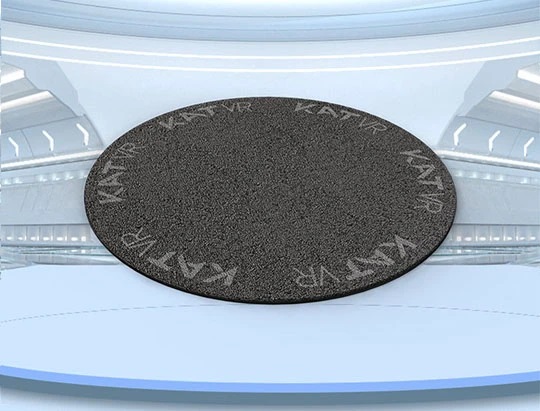
Pros:
- Can help users stay centered within the play area.
- The mat is thick enough to be felt even when wearing shoes.
Cons:
- Because the texture of the mat differs from the floor, entering and exiting affects immersion.
- The mat is relatively thick and easy to lift, frequently catching on feet.
Conclusion:
- Placing the mat actually creates a hazard, making it easy to trip and fall, which is counterproductive.
Lion’s Rating
Kat Loco
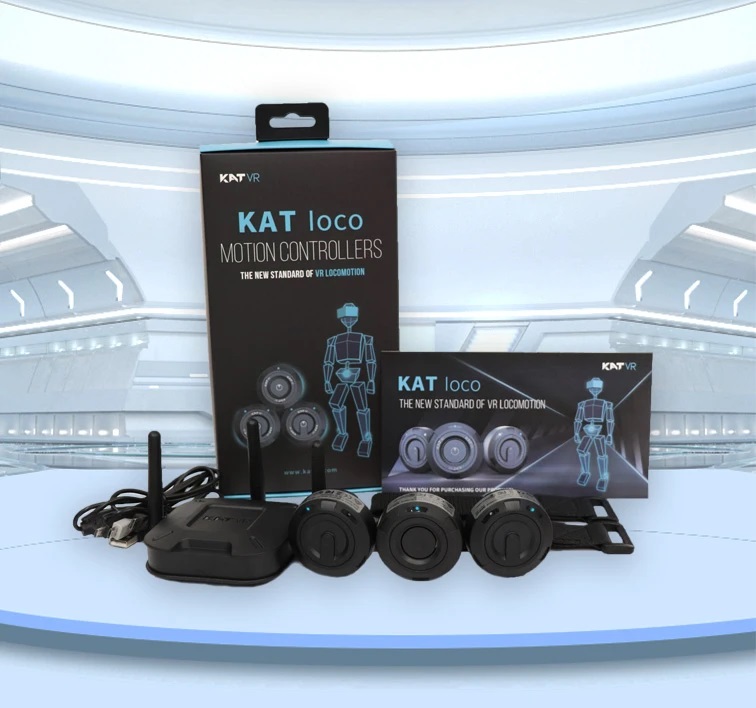
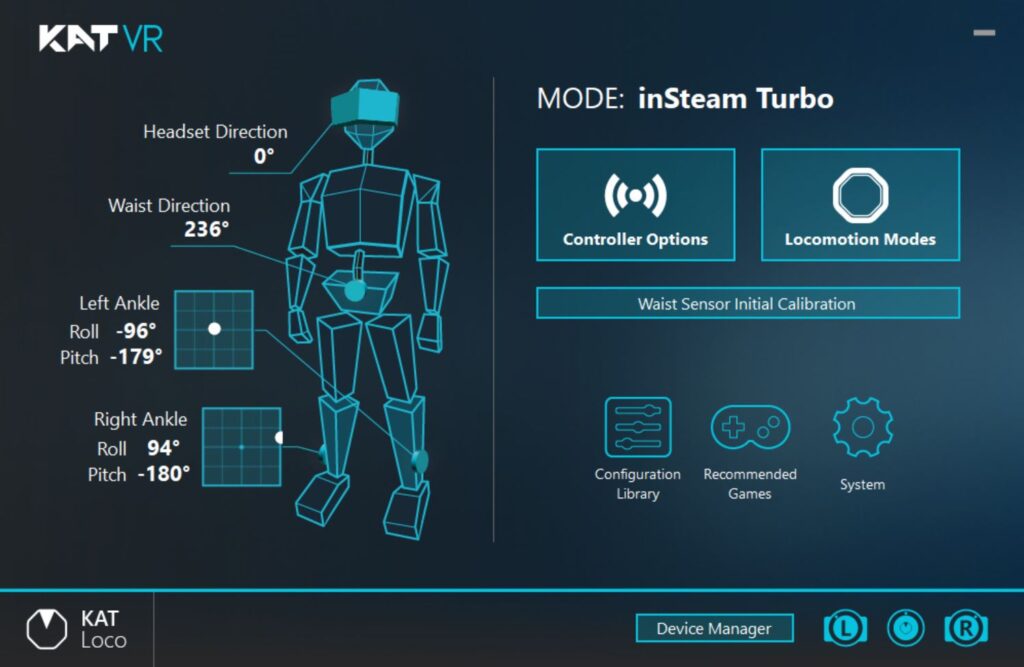
Pros:
- Allows forward movement by marching in place.
- Exquisite packaging.
- Aesthetically pleasing user interface.
Cons:
- The marching-in-place motion must maintain a certain speed to walk, which is very strenuous; it is also difficult to control walking speed based on the speed of the marching.
- The actual latency of the motion is certainly longer than the officially claimed 20ms, resulting in insufficient responsiveness.
- The cruise mode, which requires assuming four postures for forward, backward, left, and right, is fundamentally unusable.
- Monitoring data reveals that the angle of the sensors’ placement on the feet has a massive impact on the six-axis sensors, significantly reducing accuracy.
- Online documentation is insufficient, making calibration difficult even if attempted.
Conclusion:
- Since the cruise mode is unusable, one can only march in place to walk straight forward, which is very foolish.
- Another locomotion system, Cybershoes, which uses roller skates for seated movement, might be more usable than this.
- Although I have not used an omnidirectional treadmill, having observed videos, the experience of current commercial treadmills may not be ideal either.
- The above convinces me that using inside-out tracking in a sufficiently large space (large enough for a sports field), using real feet to run, crouch, and jump everywhere, yields the best experience.


